2013/10/22

Hiking on the Alps

Switzerland was just on the itinerary. It's situated on the way from Austria. I was never fascinated by anything Swiss. Even the Alps didn't attract me. Until I went on a hike to the lakes. 
I was at 3100.82m above sea level. Close to the Matterhorn in the Alps. It was well worth of skipping breakfast. I had thought nothing would take my breath away other than aurora. (I haven't seen it, though. I will.) The hiking around the 5 lakes spread across the snow-covered mountain was overwhelming and unforgettable. Among the 5 lakes, Riffelsee was the best! So beautiful! I could get rid of all the stressful things that got me burned out at work. I initially planned to come down before breakfast, but I wanted to stay longer. I will be happy for a while with this memory. 


2013/10/12

Opera vs. musical

Compare & contrast writing I composed in the teacher training program at Busan University of Foreign Studies in fall, 2012.

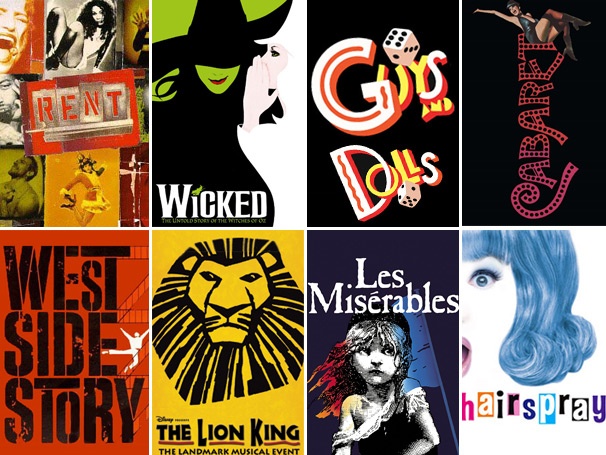
     Some people might think musicals are the modern counterpart of operas, but there are differences between the two performances. First of all, opera singers take on a role depending on his or her vocal range. For instance, mezzo-sopranos cannot sing the Queen of the Night aria in the Magic Flute, which only a few sopranos are capable of. Mezzo-sopranos typically play secondary roles in operas; On the other hand, musical ability does not play a pivotal role for choosing singers in a musical because vocal range is not as crucial a factor as in operas, so a mezzo-soprano could easily play a main role in a musical. Also other features make contributions to the show’s commercial success such as effective marketing and promotion. Secondly, major operas were created historically in such languages as Italian, German, and French, whereas hit musicals were produced predominantly in English on Broadway and at the West End. Theaters might offer a translated opera, but most audience prefer its original language, and thus people tend to study or know the background prior to viewing so that they can better appreciate the opera. Last but not least, fat women and heavy men in formal attire appear on the opera stage and show solemn facial expressions and dramatic hand gestures. Also it is not acceptable for audience members to wear jeans to an opera; However, musical singers, who are mostly slender, wear more showy and flashy costume and flamboyantly dance either in solo or in a group. I cannot imagine the late Pavarotti singing and dancing in Hairspray. Also the dress code at a musical is more relaxed for the general audience.


From Icarus to da Vinci and to Wright Brothers

Classification writing I composed in the teacher training program at Busan University of Foreign Studies in fall, 2012.

I remember googling a lot to write about this topic. I was serious about the writing class and wanted to write a challenging topic every time. I initially wanted to write about Greek+Roman mythology or gods, but it wasn't classified well. So I changed the topic to aircraft. At first, I vaguely thought this would work. There were things I didn't know about this topic. I ultimately learned lots of things, working on this topic. 


     From Icarus in the Greek myth, to Leonardo da Vinci in the Renaissance, to the Wright Brothers in modern times, mankind has longed to fly as free as a bird. People have developed various aviation vehicles, which help transport humans and supplies. These aircrafts are divided into two categories: One is buoyancy-based craft and the other is aerodynamic-based craft. Buoyant aircrafts are lighter than air and include hot-air balloons and blimps. The airbags of the inflatable objects are filled with heated air or light gases such as helium or hydrogen. These devices are able to float since the air or gas inside the bag has a relatively lower density than its surroundings outside the bag. Hot-air balloons are mainly used for the tourism industry, and blimps for advertisement at major sporting events. On the other hand, aerodynamic aircrafts are heavier than air, but they generate enough lifting power to be able to fly because of the wings. This group splits into two subcategories: fixed wing and rotary wing. Regular airplanes, hang-gliders, and paragliders belong to the fixed wing craft, whereas helicopters belong to the rotary winged craft. When an airplane speeds up, the air pressure beneath the streamlined wings is higher, and thus this force pushes it upward; When a chopper’s rotary blades spin, the shape looks like the wings of an airplane. The air flows more quickly over the top of the blades than it does below, and thus the chopper lifts vertically. Airplanes and gliders are used by passengers and holiday-goers respectively; helicopters are largely used for emergencies and military uses.  

2013/10/10

Impressionism

Definition writing I composed in the teacher training program at Busan University of Foreign Studies in fall, 2012.

     One day in the late 19th century, a critic coined a term in a satirical review on Claude Monet’s painting, “Impression, Sunrise.” This disapproval of the new style ironically labeled the name of art movement, Impressionism. However, how did this newborn style, which once received a scornful laugh, revolutionize art? First, the theme and brushwork displayed in Impressionism was not like the preceding style. Unlike Neoclassicism, which looks to ancient Rome and Greece for inspiration, Impressionist artists refused to embody historical scenes or mythological heroes. Neoclassical painters, working in their studio, placed an emphasis on composition and proportion as well as accurate costumes and settings as seen in “Oath of the Horatii” by David and “Oedipus and the Sphinx” by Ingres. On the other hand, Impressionists got out of their studio and rendered landscape and everyday lives of ordinary people they saw in reality. They especially used rough, quick brushstrokes to capture the passing moment, whereas previous painters sought to depict each material’s inherent texture. Second, the sunlight and colors played an important role in Impressionism. Though Impressionism is seemingly similar to Realism, which shows objects or scenes as they appear just like photography does, Impressionist artists focused on how the sunlight affected the landscape and color, depending on weather, the passing of time, and the angle of the sunlight. They attempted to express things subjectively with various colors which they saw in nature rather than create its exact representations. For instance, Monet produced a series of works on the same subject such as “Haystacks” and “Rouen Cathedral,” but each painting was set at a different time with different lighting. As a result, each painting though featuring the same subject has a unique value of its own. Due to the aforementioned characteristics, Impressionism established a revolutionary foothold in modern art history and became a precursor of many 21st century painting styles; Fauvism later originates from Gauguin’s primary colors in exotic scenes, and Cubism is derived from Cezanne’s three-dimensional viewpoint shown in his still lifes.


Word games & jigsaw puzzles

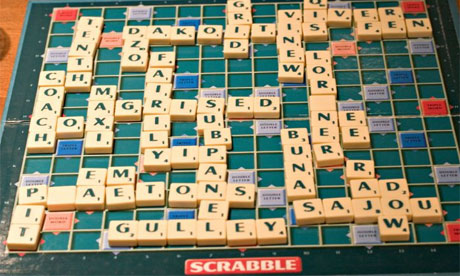
I don't know exactly when, but I got very interested in word games. My favorite game is Scrabble. I guess it was probably around the time when I first found it fun to learn English. I came across the game at a language school and it was like love at first sight. Right after the game began, I got into it and strongly wanted to win. Though I knew a lot of vocabulary, words I could come up with the given tiles were elusive. Ironically this made me focus more on the game. I don't always win the game, but I do want to win when it comes to Scrabble.

I got Boggle from an American friend. It's also interesting. Actually it drives me crazy. These 16 letters get on my nerves. I never won this game, playing with Seungwon. I think I know more than twice words than he does, but I always lose. It's frustrating. The hourglass isn't on my side. I can come up with words like these: go, hop, log, lie, wipe, goal, hope..., but what's wrong with me during the play?


Ever since I got married, I got a new hobby: jigsaw puzzle. It was Seungwon's hobby and it became mine, too. The very first puzzle we put together was Gustav Klimt's Kiss. This was framed and has been hung on the wall. Next were Monet and landscape things. Some of them were not framed and thrown away. The beauty of a jigsaw puzzle is look more closely at a masterpiece, working on it. First, place the rectangular border pieces. Then, find the matching pieces, thinking of the colors, shapes, and patterns. Once we start a puzzle, we can't put our hands off it. I come home right after work and am preoccupied with it till late night for several hours. I have to put the 1,000 pieces in place in a few days. I can't do other things until it's done. Seungwon is very good at it, but it is always I who get the honor to put the last piece in place.


Math hater turned into a (sort of ) math lover

Cause & Effect writing I composed in the teacher training program at Busan University of Foreign Studies in fall, 2012.


     Have you ever hated something and then grown fond of it? Do you think it is possible to love something you hated? This happened to me with my attitude toward math and math people. I had thought that math was neither interesting nor useful for ordinary people like me until I met some genuine math people. This is a remorseful confession of a math-hater. Let me chronicle how I used to see math, what I happened, and how it changed me. 
     Beginning from high school, I started to dislike math, and I thought that  I could compensate for it by investing more time on other subjects I was good at. The question, “Why do I have to learn trigonometrical functions or calculus?” was always lingering on my mind. Cashiers do not ask me what the square root of 9 is at a supermarket. I thought it is enough to know basic arithmetic for survival. On top of that, math class was dry and boring, and seemed to be about only memorizing formulas and constantly solving problems. My classmates who liked math appeared to me to be unkind and cold-blooded, whereas I thought of myself as flexible because I could see that 1 plus 1 could be bigger than 2. Upon my admission to college, I thought I was done with math. This tedious subject would no longer exist in my life, and I ceremoniously threw away all my math books. Math was alien to me and useless, and existed in another world only for math people.   
     However, opposites attract, maybe: I got married to a mathematician. My husband and his coworkers I socialized with turned my world upside down. I found out that math is around me and useful for understanding what is going on in my daily life; it lies in the golden ratio and rule in art pieces and Bach’s symmetrical music. Pythagoras once accounted for the correlation between musical chords and the lowest common multiple; a note represents a number, and when the notes in a chord such as Do, Mi, and Sol refer to a numerical relationship, they sound pleasant. If not, they do not sound amusing. I also learned that math is not just about simple calculation. There is even a math professor who failed at two-digit addition, but is dexterous with proving complex math problems, which is seemingly paradoxical to the concept of math I had. Talking with these people helped me to think outside the box. They are the ones who do not take things as they are; they catch the hidden meanings beyond the surface that the manipulative media provides. I realized that math is not a horrible subject which is full of numbers and calculations, nor is it apart from my daily life. Math people are neither strange, unkind nor callous.   
     Due to my contacts with math people over the years, I found that math is not useless at all. I learned two important things. First, math is not about solving equations, problems or calculating numbers; rather it is about developing logical thinking, prediction skills, and wise judgment. Second, why I have to learn math changed into what I can get through math. I have even bought a math book written in English. There are reasons why every country has so many years of compulsory math courses in their curriculum. Math is a handy tool which helps develop brain activity. Life requires an endless array of decisions, and logical thinking nurtured by mathematical skills can lead us to the rational decision. 


Honestly I still don't love math. My attitude has changed, though. That's a giant step for me. I often tell my students that math is important because I really don't want them to regret like I did. Teachers have to play a crucial role to help their students find the right paths. 

2013/10/08

The Spanish Steps in Rome + The Roman Holiday

Descriptive writing I composed in the teacher training program at Busan University of Foreign Studies in fall, 2012.


     After I saw the movie, The Roman Holiday, the Spanish Steps and its vicinity situated in downtown Rome was on my must-see itinerary. When I arrived there, I found myself lost and out of place in an array of dazzling high-end shops, which boasted ostentatious couture. After a while, I found myself pleasantly standing in an open square called Piazza di Spagna. In the center of the square was a fountain which looks like an old boat. The water, which once had been used for drinking, offered a refreshing spray of water and became a good background for tourist pictures. Up ahead were the monumental 138 steps which lead to Trinita del Monti church at the top of the hill. I enjoyed a fine view at the front yard of the church while I was overlooking the steps and the fountain. On the right of the steps was a Keats-Shelly Memorial which houses memorabilia connected with the two poets. The museum is especially dedicated to Keats, who died there when it used to be an apartment building. Walking down the long stone steps, I reminisced about  Princess Ann from the movie who was licking ice cream, hopping down the steps.   


I was finally there in summer of 2007.  I was thrilled, which was beyond expression. There were so many people. Too many people. I didn't have a reflective time to myself to think of the movie. Looking at the picture again, I didn't put sunscreen or anything on. Terrible for my skin!
I proudly left a few Korean lines in the guest book of the Keats-Shelly Memorial, hoping that I was the first Korean to visit there.
I really want to go to Rome again. I wish I could live in Italy. Everything was pleasant. Though things didn't look organized, I didn't care. I know I'm lenient about things in Rome. Every building seemed to have a historical story. The ruins of the Roman Forum and the adjacent Palatine Hill triggered my imagination. One tranquil morning looking over the forum on the hill was unforgettable. And the Italian food, especially. My body demands some Korean food overseas, but I can go on a long journey without Korean food if I have Italian food.